PokerStars Casino Review The Giant With a Rap Sheet
 By Sarah Mitchell
After dissecting Cashman Casino, a social app dressed up by fake reviews as a real casino, I turned my attention to PokerStars Casino, and I want to be upfront about something: this is the opposite problem. PokerStars is not a fake casino. It is one of the most heavily licensed, longest-running real money gambling operators on the planet, owned by Flutter Entertainment, the largest online betting group in the world
And that's exactly why it deserves a harder look, not a softer one. Because the bigger the brand, the lazier the reviews get. Most "PokerStars Casino review" content online is affiliate copy that recites the licence list, praises the welcome bonus, and collects a commission.
Almost none of it tells you that this company once operated illegally in the United States and paid over $700 million to make the Department of Justice go away, that it later paid hundreds of millions more to settle with the state of Kentucky, that its own most loyal players once went on strike against it, or that its modern-day Trustpilot pages are a graveyard of frozen accounts and verification loops.
So here is my honest, well-researched review: the genuinely good, which is substantial, and the genuinely bad, which is more substantial than the marketing wants you to know.

What PokerStars Casino Actually Is
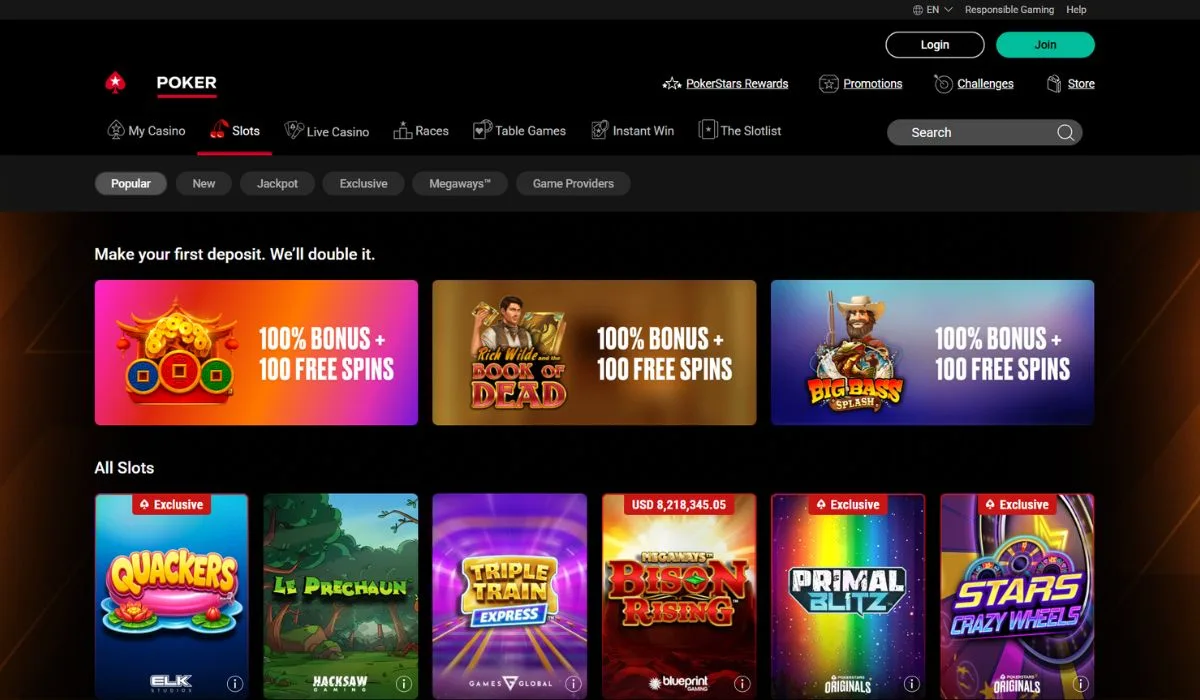
PokerStars began life in 2001 as an online poker room and grew into the undisputed king of the game. The biggest player pool, the biggest tournaments, the site where the online poker boom happened. PokerStars Casino is the newer layer bolted onto that empire: a full real-money casino product (slots, blackjack, roulette, live dealer tables) sharing a wallet and account with the poker client.
Ownership has changed hands twice in ways that matter. In 2014, Canadian firm Amaya Gaming bought the whole operation for roughly US$4.9 billion. In 2020, The Stars Group merged into Flutter Entertainment — the Dublin-listed giant that also owns FanDuel, Paddy Power, Betfair and Sky Betting & Gaming.
On licensing, PokerStars is legitimately blue-chip. Depending on the market, it operates under the Malta Gaming Authority, the Isle of Man GSC, the UK Gambling Commission, and individual regulators in markets like Sweden, plus state-level licences in regulated US states such as New Jersey, Michigan and Pennsylvania. Real deposits, real withdrawals, real regulatory oversight, real dispute pathways. Everything the fake Cashman Casino Australia review pretended to be, PokerStars actually is on paper.
Now let's talk about what's underneath the paper.
The History Nobody Puts in the Welcome Email
You cannot honestly review this company without its record, so here it is, dates and dollar signs included.
Black Friday, 2011
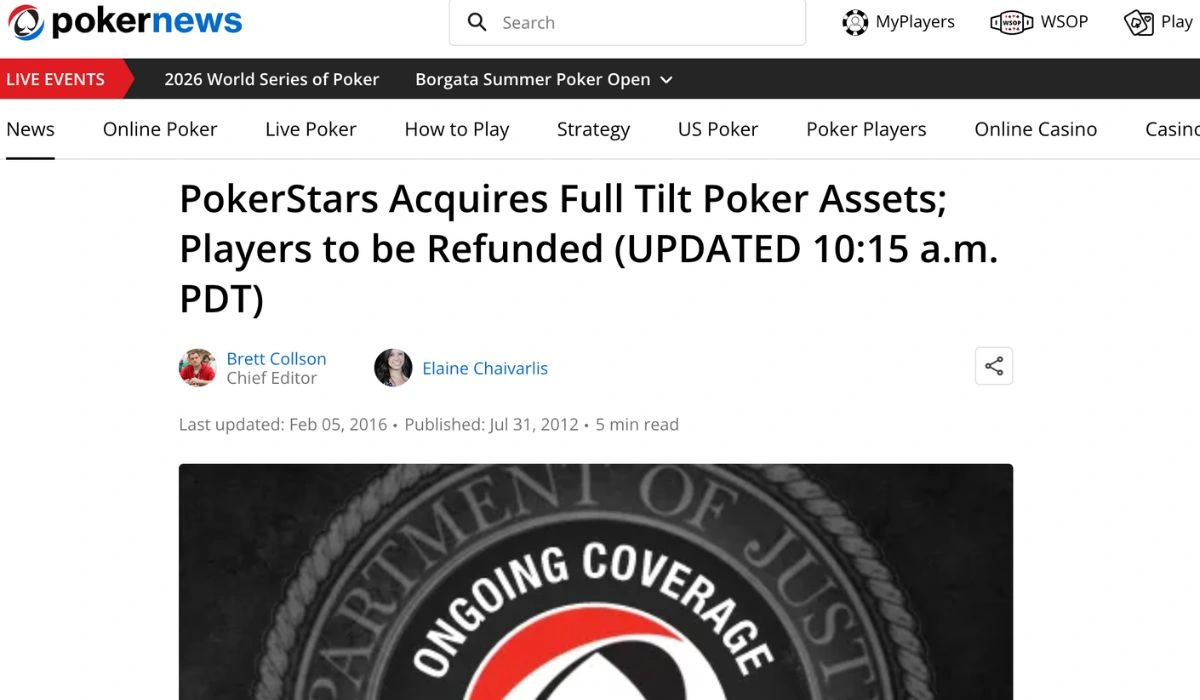
On 15 April 2011, the US Department of Justice unsealed indictments against executives of PokerStars, Full Tilt Poker and Absolute Poker, seizing their domains and alleging bank fraud and money laundering connected to serving US customers after the 2006 UIGEA banking prohibitions. PokerStars had chosen to keep operating in the US in that legal grey-to-black zone for five years. In July 2012 it settled, agreeing to forfeit $731 million (including $547 million to the US government) with the civil claims dismissed, no admission of wrongdoing, but a very expensive exit.
The Full Tilt Rescue, Genuine Credit Where Due
Here's the part that, to be fair, built PokerStars' reputation rather than destroyed it. Its rival Full Tilt turned out to be functionally insolvent. Prosecutors described it as having operated like a Ponzi scheme, with roughly $390 million owed to players against about $60 million in the bank, while insiders had paid themselves hundreds of millions from player funds.
As part of its DOJ settlement, PokerStars acquired Full Tilt's assets and repaid Full Tilt's non-US players in full (around $184 million), while the forfeiture funded US player claims. PokerStars' own players, notably, were paid promptly after Black Friday. In an industry where "your balance is safe" is often a lie, PokerStars made hundreds of thousands of other people's customers whole. That is a real trust signal, and I won't pretend otherwise.
Kentucky, The Decade-Long Hangover
The Commonwealth of Kentucky sued over pre-2011 losses by its residents, at one point winning a judgment inflated to $870 million (later $1.3 billion with interest).
After appeals swung both ways, Flutter settled in 2021 for a total of $300 million. However you apportion blame between an opportunistic statute and an operator that shouldn't have been in the market, that's the price tag of the pre-2011 business model.
The Amaya Era and The Executive Scandal
Amaya's founder-CEO David Baazov, the man behind the $4.9 billion PokerStars acquisition, was charged by Quebec's securities regulator with insider trading offences connected to that very deal. He resigned, and the prosecution ultimately collapsed on procedural grounds in 2018. He was never convicted, but "our CEO was charged over the deal that bought us" is not a line item most casino reviews mention.
The Loyalty-Program Betrayal, 2015–16
This is the wound the poker community has never forgotten. For years, PokerStars sold high-volume players a two-year promise: grind to Supernova Elite status (a million VIP points — a full-time job's worth of play), and you'd keep elite rewards, worth up to $135,000 a year and effectively 70% rakeback, through the following year.
In November 2015, under Amaya, PokerStars gutted the program with weeks of notice, capping rewards, devaluing accumulated points by roughly a quarter overnight, and killing Supernova Elite entirely, including for players who had already put in the year's grind under the old promise.
Over a thousand players went on a coordinated three-day strike; tournament guarantees were missed; pros like Dani Stern publicly called it outright deception. PokerStars honoured only a reduced 45% rate for one transition year. Rake went up in subsequent years, rewards kept shrinking, and further player protests followed in 2019.
Whatever the recreational-player business logic, the mechanism was unmistakable: change the deal after the loyal customers had already paid for it. Remember that pattern when you read any current PokerStars promotion. Terms are terms until they aren't.
What Players Are Experiencing Right Now
I read through Trustpilot (across the .com, .co.uk and casino-specific pages), AskGamblers, CasinoGuru's complaint database and community forums. The modern picture is genuinely two-sided.
The Good - And It's Real:
Watchdog data is respectable for an operator this size. One major complaint mediator shows roughly 94% of a couple of hundred logged complaints resolved, with average response times around two days. Verified players and testers consistently report that once an account is fully verified, withdrawals are fast. For players who prioritise fast withdrawal casinos, this is one of the operator's stronger points, provided KYC has already been completed.
- E-wallets often within hours
- Cards and banks in 3–5 business days, with no fees and no maximum caps in most markets.
The software is professional, the game library is deep (major studios, live dealer, progressive jackpots), and the poker-plus-casino single wallet is genuinely convenient. Plenty of long-term users report years of trouble-free cashouts, including four-figure withdrawals. And unlike the offshore fake casinos I review, when PokerStars does hold your money, there is an actual regulator you can escalate to.
The Bad: The Pattern I Kept Seeing Everywhere:
Deposit friction is zero; withdrawal friction is where the pain lives. The single most repeated complaint, across every review platform, goes like this: money in within seconds, then at first withdrawal or after a big win, the account is frozen pending verification, documents are submitted repeatedly, automated emails contradict each other, live chat never reaches a human, and the loop runs for weeks. UK players describe accounts restricted immediately after depositing, funds held, and no phone support or clear escalation path.
One documented complaint involved a player waiting six months on a sizable withdrawal while being bounced between payment-confirmation emails. Some of this is legitimate KYC, source of funds and anti-money-laundering law that every licensed operator must enforce. I want to be fair about that, and it's partly the price of playing at a regulated site. But the communication around it is, by overwhelming player testimony, poor: template responses, week-long silences, and a support apparatus that feels engineered to deflect rather than resolve. For a company with Flutter's resources, that's a choice, not a limitation.
The Perennial Gripes:
Slot RTP complaints and "the games are rigged" fury are constant, as at every casino. I discount most of that, because variance is brutal and audited RNGs are exactly what the multiple licences exist to police.
More Substantively:
the casino cross-sell is aggressive (a poker brand steering poker players toward house-edge casino games is a deliberate margin play), bonuses come wrapped in dense conditions and non-withdrawable credit structures, and one alarming UK review pattern involves players reporting they could still deposit while enrolled in GAMSTOP self-exclusion — allegations serious enough that if true they belong in front of the Gambling Commission, and worth flagging even as allegations.
The "PokerStars Casino Australia" Trap
Because my last review lived in the Australian context, let me kill this cleanly: PokerStars does not serve Australian residents. It withdrew from the Australian market in 2017 when the Interactive Gambling Amendment Act closed the loophole that offshore poker sites had been using. Online casino-style gambling and unlicensed online poker are prohibited for Australians, full stop.
So when you find glossy articles about "PokerStars Casino Australia" promising sign-up bonuses and AUD deposits, and they are out there, written in the same breathless affiliate voice as the fake Cashman review, you are looking at one of two things:
- Outdated content about a market the company left the better part of a decade ago, or bait steering you toward mirror sites and unlicensed impostors trading on the brand.
- Same scam architecture, more famous logo. Any "review" telling Australians they can play PokerStars Casino today is telling you everything you need to know about that reviewer.
My Expert Assessment
As a Licensed Operator
Top tier. Multiple first-rate regulators, a parent company answerable to public markets, segregated player funds, audited games, and crucially, a demonstrated history of player balances actually being paid, including the Full Tilt cleanup. If you're going to gamble real money online, this is the category of operator you should insist on.
As a Corporate Citizen
Complicated, and the marketing's amnesia about it is why reviews like mine exist. This is a company that built its empire partly on five years of US operation the DOJ considered criminal, paid over a billion dollars across settlements to close that chapter, and then, under new ownership, demonstrated with the Supernova Elite affair that it will rewrite promises to its most committed customers when the spreadsheet says so. None of that means your withdrawal won't arrive. All of it means you should read their terms as a counterparty, not a fan.
As a Casino Product
Good software, deep library, fast payouts once verified. Bracketed by an onboarding-to-cashout pipeline that too many real players describe as a document-resubmission purgatory, and a support system unworthy of the brand. Verify your account fully before you deposit meaningfully, keep your documents current, deposit and withdraw by the same method, and screenshot everything.
As a Place for Recreational Gamblers
Never forget what the casino side is. Poker is a skill game against other players; the casino is a math machine against you, with a built-in house edge on every spin and hand, cross-sold to you precisely because it's more profitable for them than poker rake. The licences guarantee the games are fair. They do not guarantee you won't lose. Fairness and a house edge coexist by design.
Practical Advice Before Using PokerStars Casino
Complete full KYC verification on day one, before any serious deposit. It converts the number-one complaint scenario into a non-event. Read bonus terms line by line; assume any promotional credit is non-withdrawable until proven otherwise.
- Use the site's deposit limits, cool-offs and self-exclusion tools proactively, not after a bad night.
- If you're in the UK on GAMSTOP or any self-exclusion register anywhere, treat the allegations above as your cue to add bank-level gambling blocks as a second layer rather than relying on any operator's systems alone.
- If a withdrawal stalls past the published window, skip the chat-bot loop: file a formal written complaint, then escalate to the licensing regulator for your jurisdiction or an ADR service. That escalation path is the entire point of playing licensed, so use it.
- And if you're in Australia: there is no legal PokerStars Casino for you; close the tab on anything claiming otherwise.
If gambling is causing you stress, or you're chasing losses, support exists and works: Gambling Help Online in Australia, GamCare in the UK, or the equivalent service where you live.
Final Verdict: PokerStars Casino
PokerStars Casino is what a real online casino looks like — which means it comes with real licences, real payouts, real regulatory accountability, and a real corporate history with over a billion dollars in settlements, a torched loyalty covenant, and a customer-service culture that treats verification as the player's problem. I'd trust it with a withdrawal of far more than 95% of what's on the internet. I'd trust its promises exactly as far as the current terms and conditions, and not one sentence further.
The fake casinos lie about what they are. The giants tell the truth about what they are quietly, in the settlement records, the strike headlines and the complaint boards, and count on nobody reading it. But now you have.